
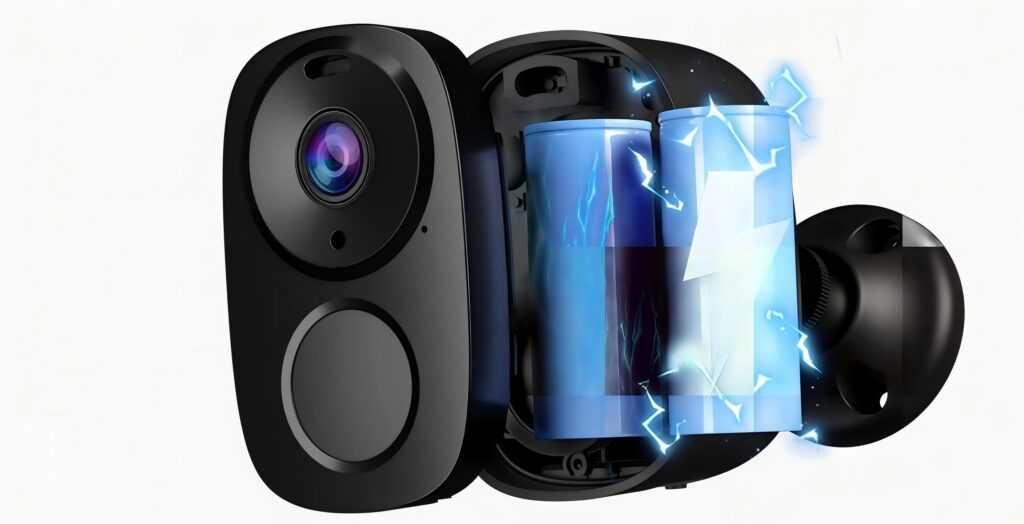
In the field of security monitoring, “battery life anxiety” was once a fatal flaw of battery-powered cameras. For devices installed at high altitudes or in remote locations, frequent battery replacement is not only troublesome but also causes monitoring interruptions. The emergence of battery-powered low-consumption cameras has completely changed this situation. With its unique technical design, it achieves ultra-long battery life while ensuring monitoring effectiveness, becoming a new favorite for home security and outdoor monitoring. Today, we will uncover its mystery and explore the advantages of this technology.
What is a Battery-Powered Low-Consumption Camera?
As the name suggests, a battery-powered low-consumption camera is a monitoring device that uses a battery as its main power source and achieves extremely low energy consumption through hardware optimization and intelligent algorithms. Different from the “continuous high-load operation” mode of traditional battery-powered cameras, it adopts an “on-demand activation” working logic. Its core lies in solving the contradiction between “battery life and performance” through technological innovation—freeing itself from reliance on wired power sources while avoiding the trouble of frequent charging.
Its core technical support comes from two major directions: first, the application of low-consumption components at the hardware level, such as high-efficiency power management chips and energy-saving image sensors; second, intelligent control strategies at the software level, among which “motion wake-up technology” is the most crucial. This technology keeps the camera in a near-dormant low-consumption state most of the time and only fully activates it when effective motion is detected, fundamentally reducing energy consumption.
Core Features and Advantages of Battery-Powered Low-Consumption Cameras
If traditional cameras are “sentinels on constant alert”, then battery-powered low-consumption cameras are “intelligent on-duty guards”. Their advantages are reflected in the entire process from installation to use, which can be specifically divided into the following dimensions:
1. Ultra-Long Battery Life: Bid Farewell to Battery Anxiety, Annual Charging Becomes Possible
Battery life is the core advantage of battery-powered low-consumption cameras, which is inseparable from the precise empowerment of “motion wake-up technology”. When no motion is detected, the camera’s image sensor operates in a pre-detection mode with low resolution and low frame rate, and the power consumption at this time is less than one percent of that in the full-load state; when motion is detected, the system will quickly wake up and switch to the full-resolution mode to capture images, and immediately return to the low-consumption state after completion.
This “event-driven” working mode maximizes the utilization of battery energy. Currently, mainstream products in the industry can achieve a battery life of 180 days, and some optimized solutions can even reach one year without charging or battery replacement. For devices installed in hard-to-reach locations such as roofs and exterior walls, this means completely getting rid of the trouble of frequent maintenance.
2. Installation Freedom: Not Restricted by Power Supply, Install Anywhere You Need
The installation of traditional cameras is often restricted by the location of power outlets, and the wiring cost in outdoor or remote areas is even higher. Battery-powered low-consumption cameras completely break this restriction—no complicated wiring is required. As long as there is installation space, they can be easily deployed, whether it is the corner of a home courtyard, a rural orchard, or a temporary construction site warehouse.
This flexibility is also reflected in scenario adaptability: when matched with a solar panel, it can achieve “uninterrupted power supply” for outdoor monitoring; for areas without a network, some products support long-distance low-consumption communication technologies such as LoRa, which can stably transmit data within a range of several kilometers. It can be quickly adapted to home security, agricultural monitoring, store duty, industrial inspection and other scenarios.
3. Uncompromised Performance: Balancing HD Capture and Intelligent Filtering
Many people may worry that “low consumption” means “low performance”, but the actual situation is quite the opposite. Battery-powered low-consumption cameras adopt an “on-demand performance output” strategy, saving energy at ordinary times but never failing at critical moments—when effective motion is detected, they will immediately activate the HD image sensor to capture 1080P or even 4K resolution images, ensuring that monitoring details are clearly distinguishable.
What’s more intelligent is that it can effectively reduce false alarm interference. Through 16×9 grid area detection technology, users can specify key monitoring areas; at the same time, combined with intelligent algorithms, it can distinguish between effective movements (such as human activities) and invalid interferences (such as wind-blown trees, small animals scurrying), so that alarms are only triggered when really needed, avoiding the “wolf is coming” trouble of traditional cameras.
4. Economical and Environmentally Friendly: Dual Benefits of Cost Reduction & Efficiency Improvement and Green Energy Conservation
From the perspective of usage cost, the advantages of battery-powered low-consumption cameras are very obvious: ultra-long battery life greatly reduces battery replacement costs and manual maintenance costs; the feature of no wiring required reduces installation costs, which is especially suitable for large-scale deployment scenarios. For commercial users such as stores and factories, long-term use can significantly reduce operating expenses.
In terms of environmental protection, it also performs outstandingly. The low-consumption design means less energy consumption, and when matched with a solar power supply scheme, it can realize full clean energy drive and reduce carbon emissions. For remote areas with unstable power supply, it can also avoid equipment damage caused by power supply problems and improve the service life of the equipment.
5. Strong Environmental Adaptability: Stable Operation in Harsh Environments
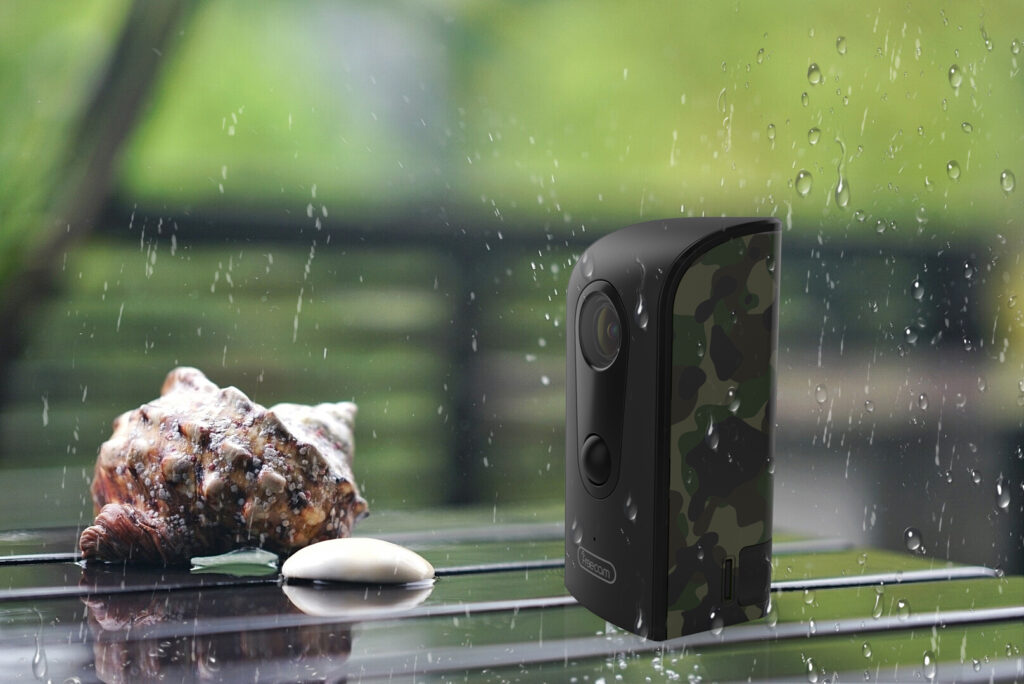
Battery-powered low-consumption cameras are often designed with strict environmental adaptability and are more reliable than traditional equipment in harsh conditions such as high and low temperatures and humidity. Traditional cameras are prone to rapid battery depletion in cold environments, while the battery management system of low-consumption equipment has been optimized, which can maintain stable battery life in the temperature range of -20℃ to 50℃. Whether it is the severe cold in the north or the sweltering heat in the south, it can ensure uninterrupted monitoring.
Final Thoughts: The “Lightweight Revolution” of Monitoring Equipment
The emergence of battery-powered low-consumption cameras is essentially a “lightweight revolution” in the field of security monitoring—it breaks away from the constraints of power supply and wiring, and achieves wider monitoring coverage with lower costs and higher efficiency. From the perspective of core technology, the combination of motion wake-up, intelligent algorithms and low-consumption hardware makes “long battery life” and “high performance” no longer contradictory; from the perspective of use value, it transforms monitoring equipment from “professional and complex engineering equipment” into an “intelligent tool accessible to everyone”.
If you are looking for a security device that is easy to install, requires no frequent maintenance and has reliable monitoring, then battery-powered low-consumption cameras are undoubtedly the best choice at present. With the continuous upgrading of technology, it will achieve longer battery life and more intelligent analysis capabilities in the future, making security protection easier and more efficient.
